




Does Spinal Stenosis Qualify for Disability Under Social Security’s Rules?
With spinal stenosis, doctors may have told you that spaces in your spine are narrowing and putting pressure on the spinal cord or nerve roots.
You could have this in your lower back, called lumbar spinal stenosis, or in your neck, called cervical spinal stenosis.
The Social Security Administration (SSA) has specific disability benefits listings for lumbar and cervical spinal stenosis.
Listing 1.16 in the official Social Security list of impairments applies when lumbar spinal stenosis compromises the cauda equina, a bundle of nerve roots at the lower end of the spinal cord.
To meet Social Security’s listing for this condition, your medical evidence generally must show:
- Pain, numbness or cramping in one or both legs that worsens when you walk or stand
- Pain in arms and hands
- Muscle weakness
- Sensory changes, reduced reflexes or certain other neurological signs
- Imaging or an operative report showing lumbar stenosis compromising the cauda equina
- Serious functional limitations lasting or expected to last at least 12 months
Many people with disabling spinal stenosis will not meet every technical requirement of Listing 1.16.
But Listing 1.16 is not the only path. Listing 1.15 covers spinal disorders that compress a nerve root in either your neck or your lower back.
When the problem is in your neck, Social Security looks at pain, disruptive sensations and muscle fatigue along the path of the affected nerve, plus difficulty using your arms and hands.
The functional requirements for either listing are strict. Meeting them may require a documented medical need for a walker, two canes, two crutches, another qualifying mobility device, a one-handed assistive device or two-handed assistive device or inability to use hands.
If your problem is compression of the spinal cord rather than the nerve root, a separate Social Security Disability listing for myelopathy under neurological disorders may be the one that applies to you.
Even if you don’t meet these listings perfectly, Social Security will assess your residual functional capacity (RFC) and decide whether you can perform your past work or adjust to other work. Your RFC is about your daily abilities, not about which kind of spinal stenosis you have.
A successful spinal stenosis disability claim can show you struggle with these functions:
- Sitting for extended periods
- Standing or walking
- Lifting and carrying
- Bending or twisting
- Climbing stairs
- Maintaining balance
- Reaching overhead
- Turning your head
- Using your hands
- Working around hazards
- Driving
- Maintaining a regular pace at work
- Attending work consistently
Lumbar spinal stenosis often affects standing and walking. You may need to sit after only a short distance or lean forward to reduce pain.
Cervical spinal stenosis may affect your hands and arms. You may have difficulty gripping, typing, writing, reaching or handling small objects. All of these points support your disability benefits case.
Even a job that Social Security calls “sedentary” may still be impossible if sitting increases pain or if you need to leave your workstation repeatedly.
The effects of treatment are also important. Pain medications and muscle relaxers may cause drowsiness, dizziness or problems concentrating.
And your claim should consider any other medical conditions. Spinal stenosis may occur alongside degenerative disc disease, arthritis, herniated discs, obesity, diabetes or depression. The combined effects place greater limits on your ability to work than any single health issue.
At Wells, Manning, Eitenmiller & Taylor, we personally guide you through the disability process, protect your claim and help you move toward a better situation.
Make sure you’re getting help from someone with both knowledge and compassion, like the Oregon Social Security Disability lawyers at Wells, Manning, Eitenmiller & Taylor.
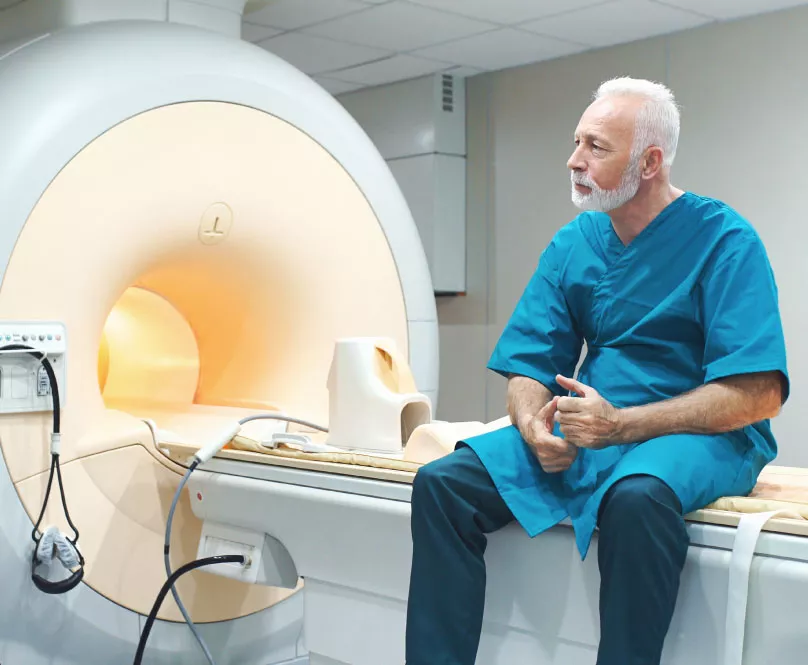
Details You Need in a Disability Claim for Spinal Stenosis
It can be difficult to get disability for spinal stenosis because Social Security does not approve benefits based on imaging alone.
An MRI may show narrowing in your spine, but your records still need to explain what the narrowing does to your body and why it rules out work.
A strong spinal stenosis disability claim combines medical evidence with highly detailed information on what you experience day to day.
Your medical records should describe:
- How often you need to change positions
- Whether you must lean forward
- Whether you need to lie down
- Whether you’ve had falls
- Whether you need help bathing or dressing
- Whether you can drive safely
- How pain affects your concentration
Specific details are more helpful than saying you “can’t walk far.”
For example, explain that you can walk from your front door to the mailbox but need to sit for 15 minutes afterward.
Explain that you can stand long enough to heat up a meal but not long enough to wash the dishes.
Your treatment history also needs fine details. Social Security will want to review everything you’ve tried: physical therapy, exercise, medications, assistive devices, and surgeries such as a laminectomy, spinal fusion or other decompression procedure.
You’ll need to explain why treatment was unsuccessful, only partly effective or unavailable to you.
The Oregon disability attorneys at Wells, Manning, Eitenmiller & Taylor can help organize your medical records and explain your limitations in a way Social Security can evaluate.
We help from the first application through appeals. A lawyer personally starts your case and remains involved, so you’re not repeatedly passed to unfamiliar people.
Our firm can help you:
- Evaluate your claim
- Apply for Social Security Disability Insurance (SSDI) or Supplemental Security Income (SSI)
- Gather medical evidence
- Collect information about your functional limits
- Describe your past work
- Appeal a denial
- Prepare for a disability hearing
- Request Appeals Council review
- Pursue federal court review when appropriate
We have offices in Eugene-Springfield, Albany, Roseburg, Coos Bay, Medford and Grants Pass. We help people throughout Oregon.
You pay no disability attorney fee unless you win benefits.
If spinal stenosis is making regular work impossible for you in Oregon, contact Wells, Manning, Eitenmiller & Taylor.
Let us help you reach a more secure life.
We’re with You Every Step of the Way
Whether you’re trying to determine if you’re qualified for disability benefits, you need help filing your application, or you received a denial notice and want another chance, our law firm helps from the beginning and stays by your side.






Have a Question about Disability Benefits?
Your health is bad. You can’t work. Your financial stability is threatened. So your head is swimming with questions. How will you get by? How does Social Security Disability work? We’ve gathered answers. See them here:
Disability FAQs »

Hear from a Wells, Manning, Eitenmiller & Taylor Client
“Have a question? The entire staff is knowledgeable and willing to help. Concerned about some aspect of your case? Say something and they usually have the words to help reassure you.”